
Showing posts with label Inferno. Show all posts

22 February 2012

Fin's Review: Inferno

I'm on record as being a huge Dario Argento fan I love his vision and the balls to the wall craziness of his films. What ever else you can say about his films they are never boring and almost always a unique experience. However it can be difficult to review Argento's films in the same way as you would most other films out there. This is primarily due to the fact that the Italian directors approach to film making is truly unique. Argento is not concerned with logic and even coherent story telling instead he attempts to create a hypnotic dreamlike vision infused with woozy, fluid camera work and  strange outlandish lighting. The result of this is two fold, firstly Argentos films are both scary and fascinating and make the viewer feel that they are observing a bizarre nightmare world which they recognise but which is weirdly out of focus. Secondly the directors disregard for the central core of most film making: script, story and acting can make aspects of his films suffer. In a strange way Argento is operating at the level of genius and amateur at the same time. Beautiful lighting and inspired camera work go hand in hand with wooden scripts and seriously cheesy acting. But for me and fans of the directors work this is part of the charm of an Argento film and if the viewer can judge these films on their own grounds and not based on the criteria of other films it is an experience like no other.
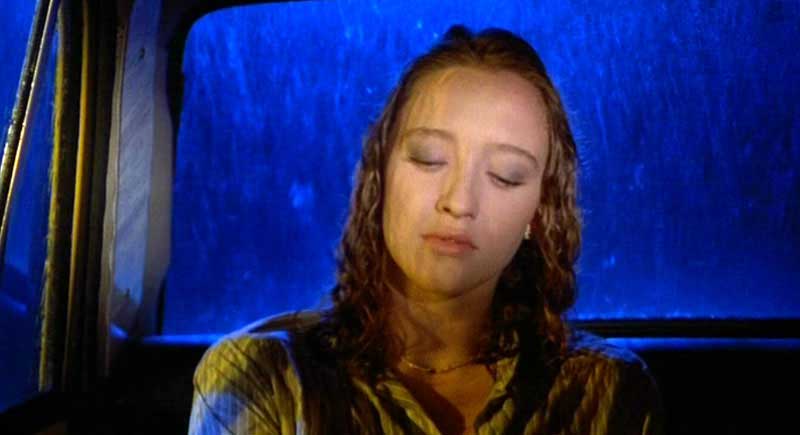

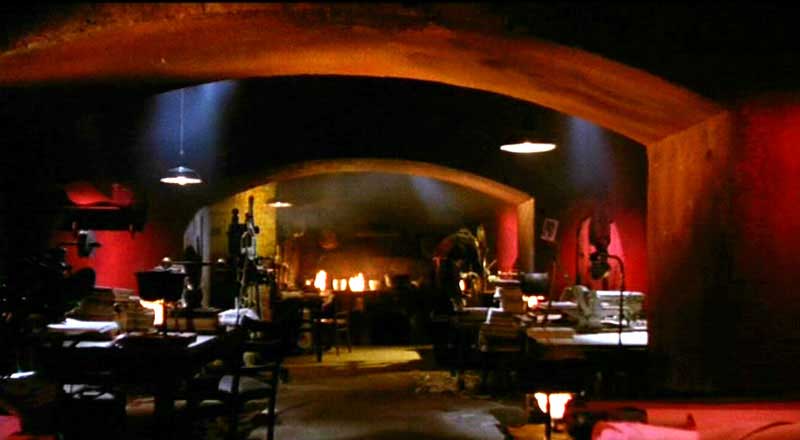
Inferno is the sequel to Argento's most famous and best film Suspiria and as a result it is hard not to compare the two films. Ultimately Inferno falls short of the heights of Suspiria but only just. Inferno is a fine example of 'Absolute Cinema' where the style and atheistic of the film overrules the actual content of the story. Inferno's hypnotic combination of beauty and strangeness pull the viewer in to an experience which is made scarier by the lack of any conventional patterns or traditional markers of the horror genre. Anything can happen in this world and it often does. If being scary is the basic benchmark of success of any horror film Inferno succeeds. The film keeps you going both due to the beguiling mystery on screen and the feeling that the answers to the mystery are just around the corner. Argento never intends for his films to make sense and this is particularly true of Inferno and despite having a very basic story building upon the mythology first encountered in Surspiria it is a pretty token effort and the story is of secondary importance to the enjoyment of the film. The lighting in Inferno is simply stunning it is both bright and dark beautiful and menacing. Every scene is lit with an artificial glare of shades of blue and red. Much of the horror of Argento's films are,  unlike most horror films, seen in the full glare of these strange lights. In a way the terror is heightened as there is no dark to escape towards. Events occur in no pattern or rational order and often are never mentioned again. Characters do things which make no logical sense. And for me this incoherence is the main strength of Inferno. Argento draws his horror from the disorientation the viewer feels. 

As much as I love Inferno I mentioned above that it doesn't quite reach the heights of Suspiria. This is partly because Argento is more restrained here doing without the frantic Goblin soundtrack we associate with most of his films. The action on screen never reaches the intensity of pitch which Suspiria manages. However the ultimate reason Inferno falls slightly short of Supiria is the ending. For all the madness on screen it is the promise of a pay off that keeps the viewer interested but ultimately in Infenro there is no pay off. The mystery we feel so close to unveiling is simply forgotten and instead we get an ending which is dangerously close to a spoof of the worst moments of Hammer horror. We are given a very convenient fire and frankly cheesy make up effects. Having said this the weak ending should not take away from a unique and chilling viewing experience. 
  

Clarky's Review: Inferno

I wasn't sure what to make of the news that Fin was bringing another Argento film to the table. On the one hand I really enjoyed Deep Red, his most coherent film (narratively speaking), but I was left cold by Suspiria (a film which has almost no narrative structure). My fears worsened when Fin explained that Inferno was a sequel to Suspiria and is often cited as one of Argento's most incoherent films.

It was with a great surprise that I found myself quite enjoying Inferno, so much so that I am open to re-watching Suspiria. On first viewing Suspiria I had no idea what to expect and as such was shocked by the lack of narrative. Whilst some viewers may find that this is more of the same, there was enough of a gap between me watching Suspiria and Inferno for me to appreciate both of them, especially once I knew what to expect.


As noted above Inferno is a sequel to Suspiria, and is actually the second part of the Three Mothers trilogy that was finally completed in 2007 with The Mother of Tears. Argento took his inspiration from Levana and Our Ladies of Sorrow, a section of the Thomas De Quincey collection of poems Suspiria de Profundis. De Quincey's work suggests that there are three Fates, three Graces and three Sorrows:
  • Mater Suspiriorum (Our Lady of Sighs) - Suspiria
  • Mater Tenebrarum (Our Lady of Darkness) - Inferno
  • Mater Lachrymarum (Our Lady of Tears) - The Mother of Tears
Inferno focuses on Mater Tenebrarum, the youngest and most cruel (although she doesn't appear to be particularly more cruel than Mater Suspiriorum). Mater Tenebrarum lives in New York, Mater Suspiriorum in Freiburg and Mater Lachrymarum (the most beautiful and powerful) lives in Rome. Unfortunately at times the whole Three Mothers backstory became a bit distracting as it wasn't well enough explained and because I was under the impression that Suspiria was set in Rome!

I realise this was my mistake but Argento isn't easy to follow at the best of times. I was especially confursed when Mater Lachrymarum turned up in Rome. She certainly is the most beautiful, but surely Tenebrarum is meant to be the youngest of the Three Sisters! I realise this is nit picking (Fin is sure to pick me up on this) but at times Argento's lack of logic really hinders a viewers enjoyment of the film.

Mater Lachrymarum and Mater Tenebrarum (the youngest!)
Once I finally got things straight in my head I was able to sit back and let the film wash over me. I actually thought that this was more coherent than Suspiria. This may be due to the opening narration describing The Three Mothers, or down to the fact that I knew what to expect. Either way I was able to make (rough) sense of what happened in the film afterwards, just don't ask me to explain it to you as every time I think I have it sorted a plot hole rears it's ugly head (why did the hot dog vendor kill Kazanian? Were the caretaker's feeding the cat's, Van Adler's body, in cohorts with Tenebarum and if so why did she then kill them?).

When thinking back about the film I actually struggled to remember what actually happened, almost as if it was a dream and this is, I think Argento's intention. The whole film has a dream like quality to it, from the colour scheme, to the actions of some of the actors. Storylines are picked up and dropped, actors come and go and no / very little explanation is offered to the viewer, allowing you to make your own interpretation of what is happening (much like in a dream). In fact at times Argento just jumps randomly to different scenes and at one point we see a random woman being hung, much like the hanging scene in Suspiria. It's almost like the film is rooted in the subconscious and isn't a direct sequel to Suspiria, but does share a lot of the same traits and mood.

Whilst I noted in my Peeping Tom review that point of view shots are used by director's are often used to make us complicit with the villain's here Argento uses the point of view shots for the victims. This simply adds to give the impression that we are in the dream / nightmare alongside them. (Although Argento himself, as per usual, commits all the murders in the movie!)


Indeed the first scene in the basement has many dreamlike qualities to it. Firstly, why on earth would you ever wander into a basement by yourself and then swim into a wholly submerged room! Within the room itself we are treated to yet more lurid blues - the water is ridiculously clear allowing for an incredible set piece. This isn't the only instance of dream logic that can be evidenced here - why isn't the room overflowing with water up into the basement? How is Rose able to hold her breath for so long? The trick here, as with all of Argento films is not to think too much and just let the film wash over you. How else do you explain the random woman stroking her cat in the middle of a lecture! 

The lighting is simple incredible, as in Suspiria, and the deep reds and blues will haunt your memory for hours afterwards. This simple device helps to set the mood of the film, and acts as a trigger for your brain. Any time you see these colours you know the person on screen is a goner. Again, this reminded me of a dream where you wake up in the morning and you have the shadow of the dream / nightmare hanging over you but you can't quite place what happened, although you know the mood. Eventually, something will trigger your memory and the dream will come back to mind instantly, just as if you see red or blue after Inferno you will be filled with a sense of dread.


As if this wasn't enough Argento has a number of motifs, some of which also tie in to Suspiria, that are evident prior to each death (although some of these seem to be forgotten about towards the end). Running water, broken ornaments and cut's to the hand (even by rat) are all prominent before death. I'm sure there is a deeper psychological meaning to all this (perhaps each one relates to one of the three keys!).

I'm really unsure where to place this on my list as there are aspects I really enjoyed and as a piece of art it evokes a real sense of mood and dread. There are some classic set pieces and some real jumps and I even enjoyed the out there soundtrack! However, it does struggle narratively and ultimately never lives up to the fantastic premise. If the Three Mothers rule the world and Mater Tenebrarum is the most cruel, then how is she overcome by this guy!